What can you set as house rules on Airbnb?
According to the Airbnb Help Center, standard house rules cover pets, events, smoking and vaping, quiet hours, the maximum number of overnight guests, commercial photography and filming, lock up at checkout, and which Airbnb Service categories you allow. You edit them in the listing editor. Additional rules cover anything else, such as removing shoes, and each must apply either during the stay or before checkout.
Airbnb checks additional rules against its policies and flags text that may not comply. Rules are shown on your listing and shared with confirmed guests in booking terms, emails and the Trips tab. Changes apply to future reservations; existing bookings keep the rules in place when they were booked. Contracts and local fines (for example from an owners' association) belong in the contracts and local rules sections, not in house rules.
What counts as a reasonable additional rule?
Airbnb's hosting advice says additional rules should be reasonable and gives examples: asking guests to put used dishes in the sink is reasonable, asking them to wash and put away dishes is not; asking them to gather used towels is reasonable, asking them to strip sheets or start a laundry load is not; asking them to separate trash into indoor bins is reasonable, asking them to take garbage off-site is not; asking them to turn off the air conditioning when leaving is reasonable. It also says hosts generally should not impose fines or penalties through house rules.
A useful test: could a guest follow it in under a minute without special equipment, and does it protect something real (safety, neighbours, the property)? If not, cut it.
Copyable template
Edit the brackets and delete rules that do not apply. Each line gives the rule and the reason.
| Topic | Wording you can copy |
|---|---|
| Guests | This home is set up for [number] guests. Extra visitors during the day are welcome up to [number] people; please check with us first for overnight stays so the house stays comfortable. |
| Quiet hours | Quiet hours are [22:00 to 08:00]. The neighbours are close and sound carries at night. The terrace is lovely after dark; we just ask for low voices. |
| Smoking | Please smoke only on the [terrace], never indoors. Use the ashtray provided and keep butts out of the garden. |
| Parties and events | We cannot host parties or events here. A birthday dinner for your own group is fine; amplified music is not. |
| Pets | [Pets are not allowed / Well-behaved dogs are welcome, up to [number]. Please keep them off the beds and tell us before booking.] |
| Pool and terrace | The pool is open [hours]. Children must always be with an adult, and there is no lifeguard. Please shower before swimming and close the pool cover at night. |
| Kitchen and bins | Please put used dishes in the sink or dishwasher. Separate recycling into the indoor bins; we take them out. |
| Heating and cooling | Please turn off heating or air conditioning and close windows when you leave, to save energy and keep insects out. |
| Security | Please lock doors and windows when you go out and at night. The gate closes by [method]. |
| Checkout | Checkout is at [10:00]. Leave keys [where], used towels in the bath, and message us when you leave. Late checkout depends on the next booking; ask and we will do our best. |
How do you keep the tone friendly?
Lead with what guests can do, then the limit. Compare "No loud music after 22:00 or you will be fined" with "Quiet hours start at 22:00 because the neighbours are close; the terrace is lovely at night, just keep voices low." The second is easier to follow and reads like a host.
- Give one reason per rule, in a few words
- Use "please" and "we ask", and keep threats out of the text
- Put the three or four rules that matter most at the top
- Avoid more than about ten rules; long lists get skimmed
- Do not repeat the same rule in the listing, the message and the book with different wording
Where should the rules be visible?
Guests should see the rules before booking (listing), at confirmation (booking terms and your first message) and in the house (where they will actually look). On the property, a one-page printout is a safe backup.
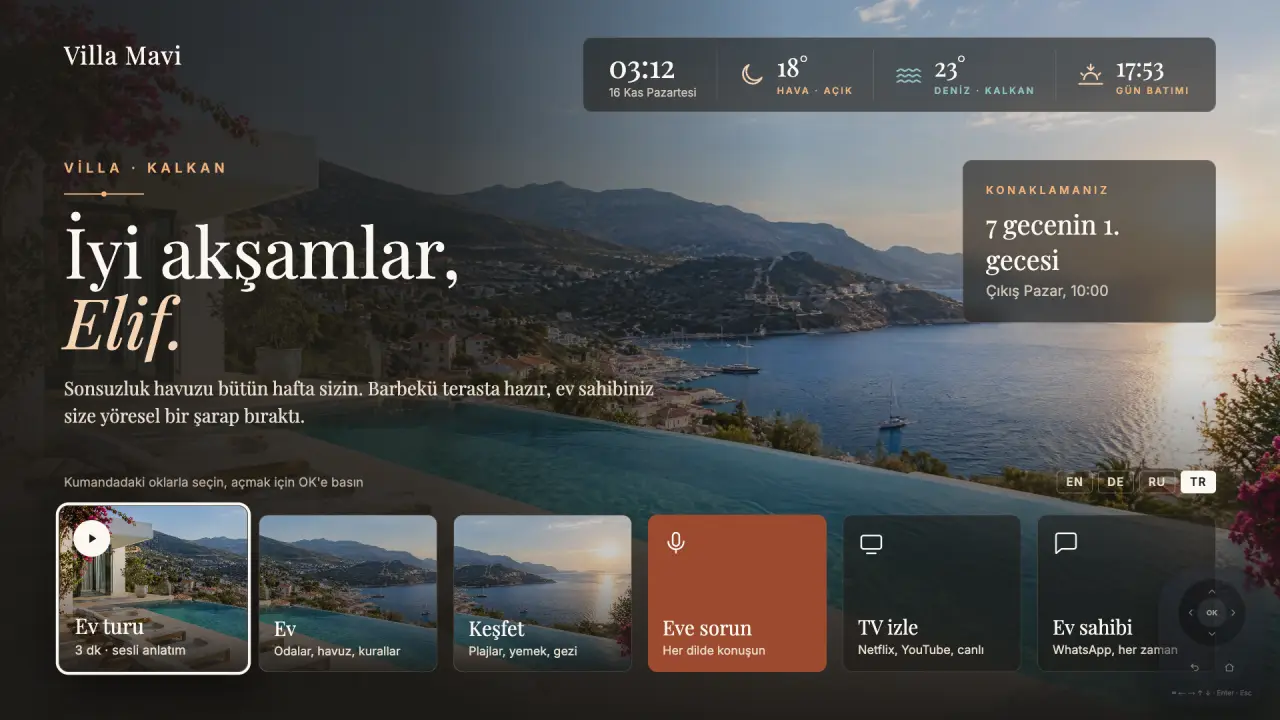
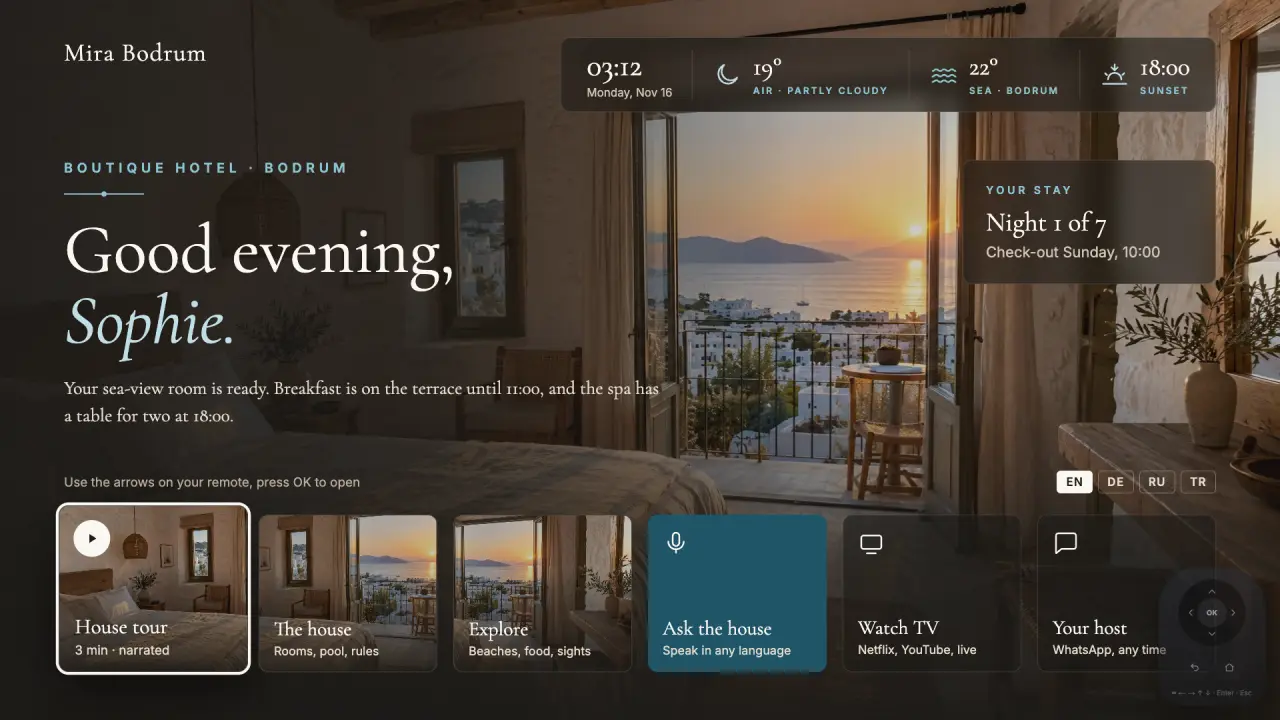
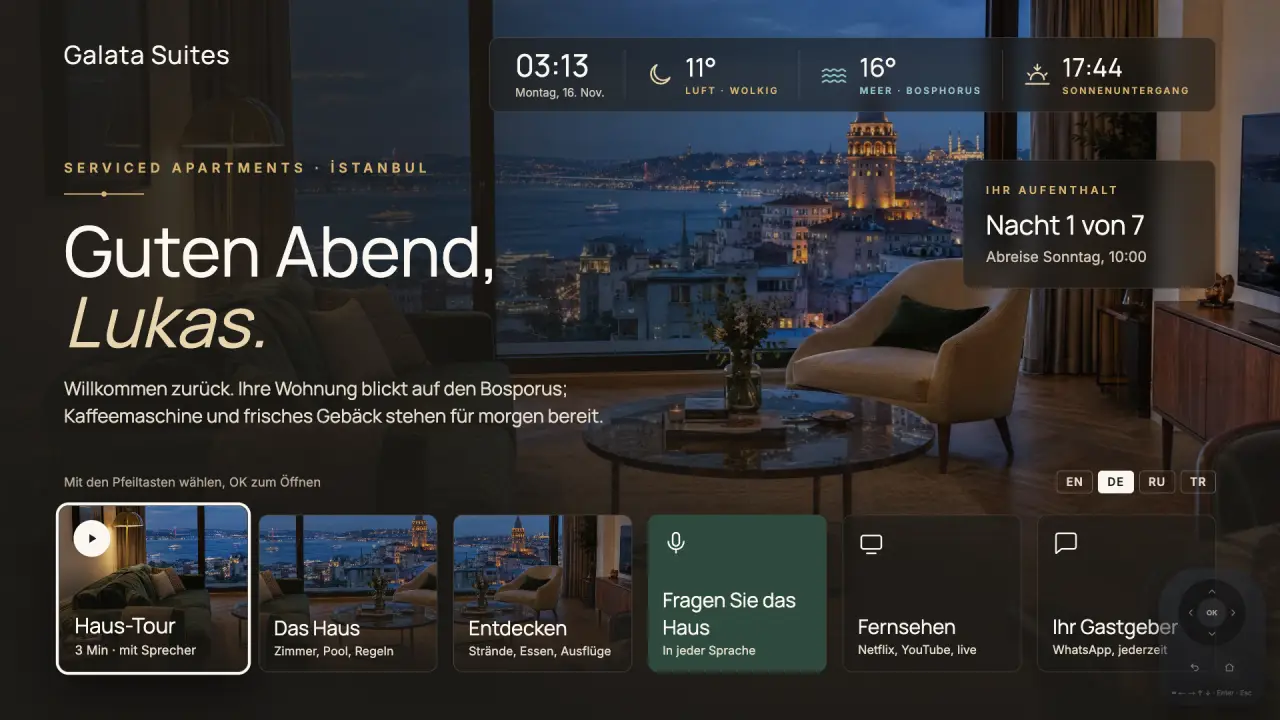
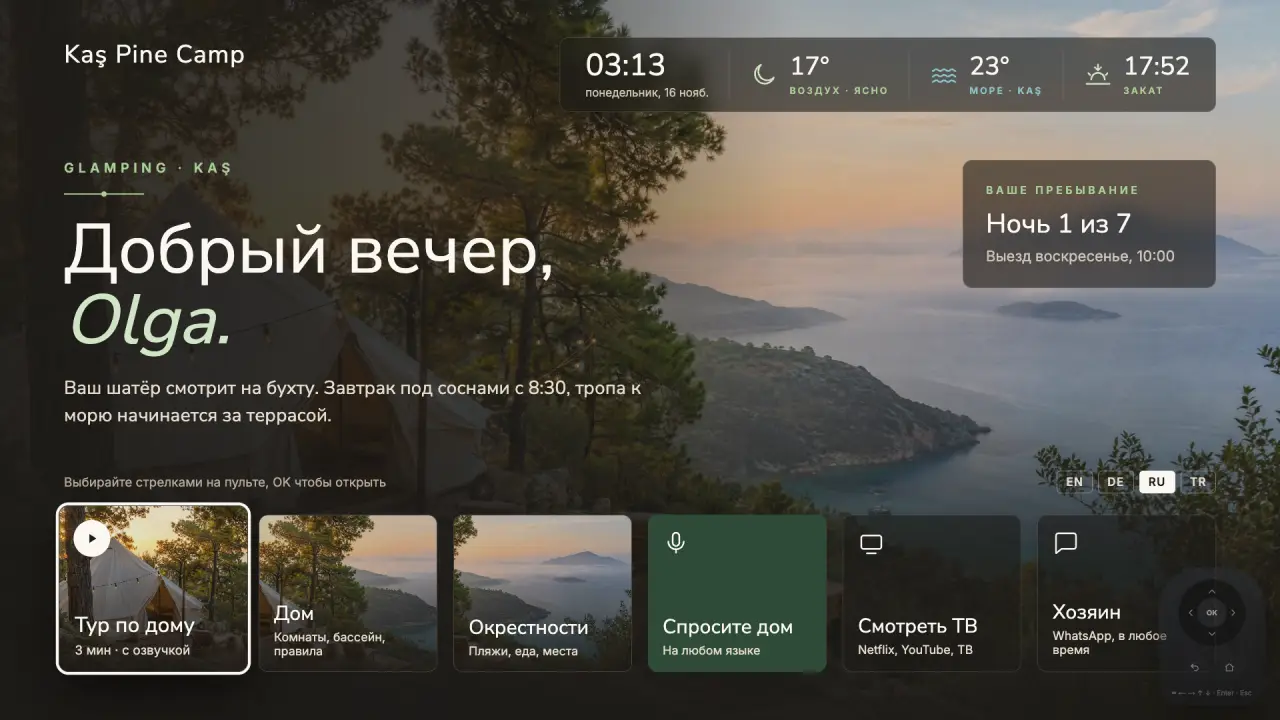
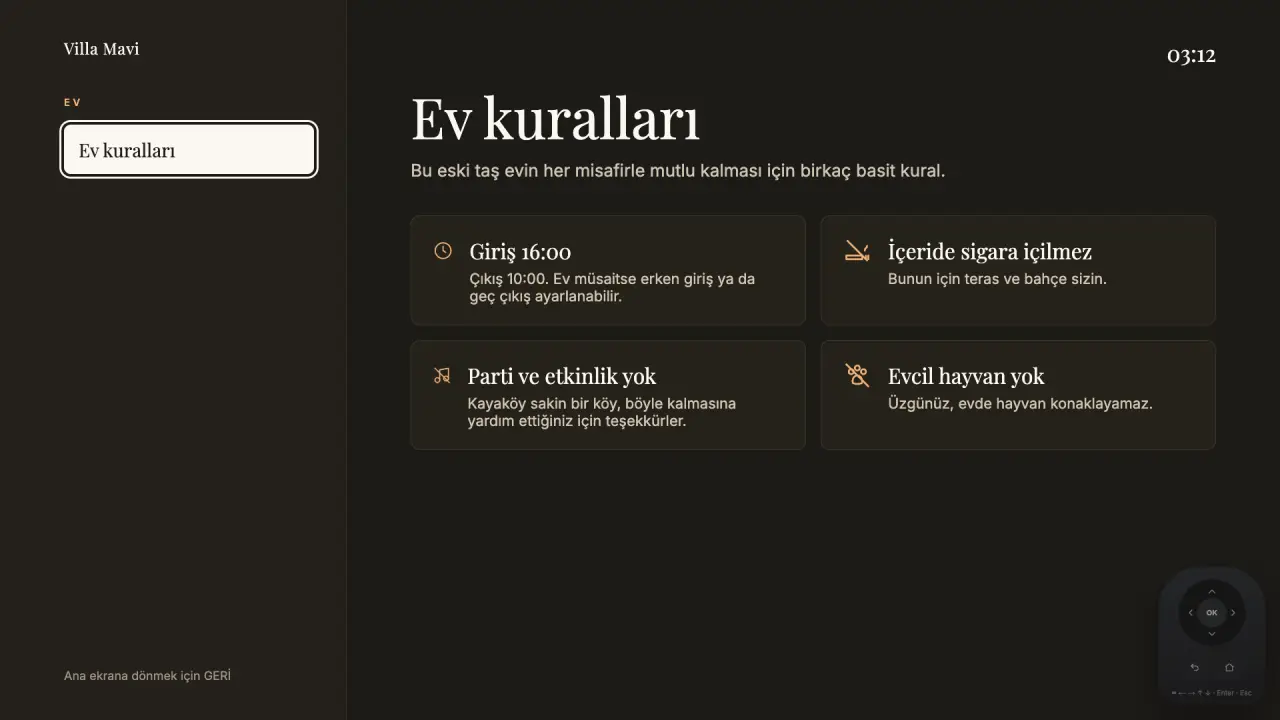
With Welcomo the rules sit in the same panel as the rest of your house information. They are shown on the living-room TV and on the guest's private phone page, in the guest's language, and the AI assistant answers rule questions (for example "can we use the hot tub at midnight?") only from what you have written, forwarding anything it cannot answer to you. You write the rules once and the AI drafts the other languages for you to review. Rules that carry legal or safety weight, such as pool safety, deserve a human check in each language.
What are friendly wording variants for the difficult rules?
Some rules are harder to word than others. Here are two or three versions of the common ones, from relaxed to firm, so you can choose the tone that suits your property.
| Rule | Relaxed | Firm but polite |
|---|---|---|
| No parties | We love guests enjoying themselves, but this is a quiet home, so parties are not possible. | Parties and events are not permitted. A relaxed dinner with your own group is fine. |
| Extra guests | Friends dropping by for dinner are welcome. Please let us know if anyone is staying over. | Only registered guests may stay overnight. Daytime visitors are welcome up to [number]. |
| Smoking | We would love a smoke-free house. The terrace has an ashtray if you need it. | No smoking indoors. Please use the terrace and take cigarette ends away from the garden. |
| Pets | Well-behaved dogs are welcome. Please keep them off the beds. | Pets are not allowed in this property because of [allergies / the pool area]. |
| Noise | The neighbours are close, so we keep voices low after 22:00. | Quiet hours are 22:00 to 08:00. Repeated noise may end the stay. |
Do not promise consequences you cannot or will not apply. On Airbnb, check what the platform allows before adding penalties.
How do you handle rule problems during a stay?
A rule written in advance is easier to enforce than one explained after the fact. If a guest breaks one, keep the first conversation calm and factual. Airbnb's Help Center advises talking to the guest first, and contacting Airbnb for next steps if that does not work. Here are scripts for the most common situations.
- Noise complaint from a neighbour. "Hi [name], a neighbour mentioned some noise from the terrace. Could you keep voices down after 22:00? Thank you, we really appreciate it."
- Extra guests discovered. "Hi [name], we noticed more people than booked. Our rules allow [number] guests, so could you let us know who is staying? We are happy to help with a small adjustment."
- Smoking indoors. "Hi [name], we noticed smoke in the house. Please smoke on the terrace only; it protects the next guests. Thanks for understanding."
- Pet that was not agreed. "Hi [name], we saw a pet in the house. Our rules do not allow pets, so please let us call to find a way forward."
How should the rules look on a printed card, a phone page and the TV?
On a printed card, keep to five or six rules in large type. On the phone page, you can include a sentence of reasoning for each. On the TV, show the rules as a short list on a screen the guest sees at arrival. Use the same wording everywhere so there is one version to maintain.
What are the common mistakes?
Check your own rules for these problems.
- More than ten rules, so none is remembered
- Rules that contradict the listing, such as quiet hours that differ from the message
- Fines or penalties written into the rules without a way to apply them
- A harsh tone from the first line
- Rules that no guest could follow, such as requiring chores at checkout
- Only in one language, so the guest who most needs them cannot read them
- Unwritten rules that you enforce anyway
Frequently asked
Can I charge a fine through my house rules?
Airbnb's hosting advice says hosts generally should not impose fines or penalties through house rules. Local government or owners' association fines can be noted separately. Check the platform terms and local law where you operate.
If I change my house rules, do they apply to existing bookings?
On Airbnb, edits apply only to future reservations; pending and confirmed reservations keep the rules in place at booking. Other platforms may differ.
How many house rules is too many?
There is no fixed limit, but more than about ten tends to be skimmed. Prioritise the rules that prevent real problems and explain each one briefly.
Should house rules also be in the guest's language?
Yes, ideally. Machine drafts are a good start for house rules, but have someone fluent review safety and legal wording.
Sources
- Airbnb Help Center: House rules · retrieved November 16, 2026
- Airbnb: Setting and creating helpful house rules · retrieved November 16, 2026